If you’ve recently noticed everyone around you obsessing over gut health and wondered, ‘Is it really that important?’, you might just find your answers here. The only time we pay better attention to what we eat is when we feel the need to lose weight. Over and above that, if you face issues with your period, PMS symptoms or anything remotely hormonal, the last thing on your mind is likely to be your food or gut health. Turns out, what you eat throughout your cycle could actually be playing a larger role in your menstrual cycle than you thought. ‘Your gut is not just connected to your hormones. It is the foundation for everything to work well in your body,’ says Richi Agarwal, Certified Nutritional Therapist and founder of Nutrition by Richi.
The Gut-Hormone Connection
If your periods are painful, heavy, irregular or accompanied by bloating and mood shifts that arrive like clockwork every month, it might be beneficial to consider that the state of your gut has a direct and significant bearing on how your period feels. ‘Your gut also communicates directly with your brain and ovaries through the HPO (hypothalamic-pituitary-ovarian) axis, the system that governs your menstrual cycle, ovulation, and hormonal rhythm. Think of it as a conversation happening constantly in the background,’ adds Agarwal.
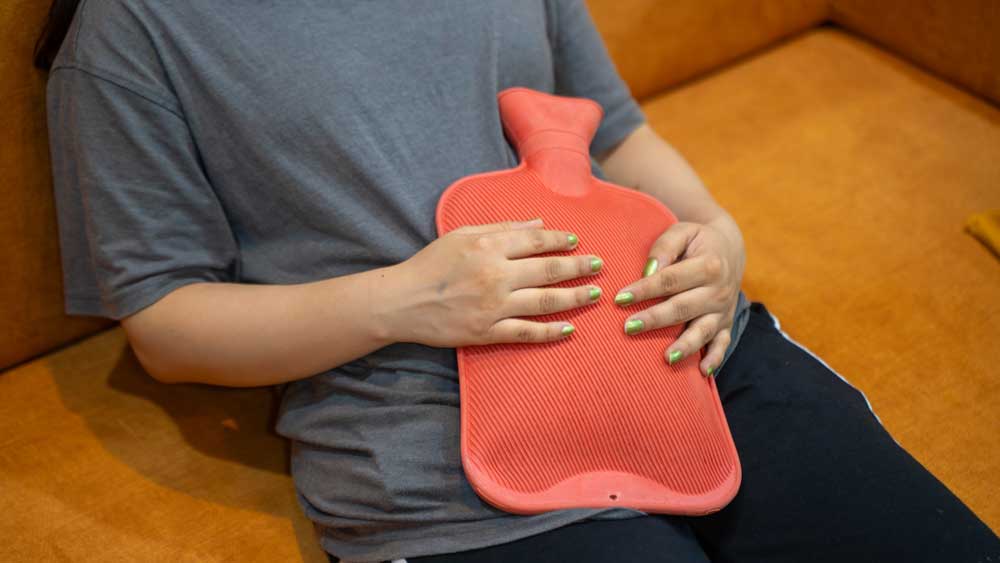
Basically, when your gut is healthy, this axis functions well and your hormones stay in balance. But when your gut is imbalanced or inflamed, it disrupts this axis, cortisol rises, progesterone gets suppressed, and your entire hormonal cascade gets affected, showing up as irregular cycles, poor ovulation, and hormonal imbalance.
The Estrobolome: What It Is And Why It Matters
‘Oestrogen Dominance is one of the most overlooked connections in women’s health,’ says Agarwal. ‘Your gut houses a group of bacteria called the estrobolome, which plays a key role in how oestrogen is processed after the liver packages it for elimination.’ When gut health is poor or you are constipated, this elimination is incomplete. Instead of leaving the body, oestrogen gets reabsorbed into the bloodstream and over time, this drives oestrogen dominance.
Symptoms of oestrogen dominance to watch out for: heavy or painful periods, breast tenderness, bloating, mood swings, anxiety, fibroids, and irregular cycles.
What Does A Gut-Hormone Misbalance Look Like?
Pre-menstrual or PMS symptoms are huge indicators of your hormonal and gut-related health. While not all PMS symptoms are purely hormonal, the root cause for many of them lies in the gut. In the days before your period in the luteal phase, progesterone naturally rises and gut motility slows down. ‘If your gut is already struggling, this slowdown becomes significantly worse, showing up as bloating, constipation, and discomfort that many women dismiss as normal PMS,’ says Agarwal. ‘This sluggish gut also impacts mood since nearly 90-95 per cent of serotonin is produced in the gut.’
In short, Agarwal suggests that a compromised microbiome means lower serotonin, making irritability and mood swings considerably more intense. We all know how real the gut-skin axis is. When the gut is not efficiently clearing excess hormones, the skin becomes an exit route, showing up as breakouts that follow your cycle. And when gut health is poor, absorption of key nutrients like iron and B vitamins suffers, leaving you with deeper fatigue and brain fog in the premenstrual days than you should ever have to feel.
What Disrupts The Gut-Hormone Axis
Several factors common to modern life are known to compromise the gut microbiome and, by extension, oestrogen metabolism. ‘Gut health is shaped by how you choose to live every day and it goes far beyond food alone,’ says Agarwal.

Antibiotics, for example, wipe out beneficial bacteria along with harmful ones and can take months for the microbiome to recover from. A diet high in processed foods, refined sugar and low in fibre starves the beneficial bacteria the gut depends on. Chronic stress elevates cortisol, which directly disrupts both gut lining integrity and hormonal balance. Poor or insufficient sleep compounds the effect. ‘Your gut repairs itself while you sleep. Poor sleep disrupts the gut-brain axis, reduces microbial diversity, and impairs the repair your gut depends on,’ Agarwal adds.
What Can Help Fix Gut Health?

Image Source: Richi Agarwal
The good news is that the gut microbiome is responsive. Dietary and lifestyle changes can meaningfully shift its composition and by extension, support more balanced oestrogen metabolism.
Here are a few things that help as per nutritionist Richi Agarwal:
Nervous system first
Sleep and stress management are the foundation. The gut cannot heal in a chronically stressed, sleep-deprived body. This comes before any food or supplement change.
Feed your microbiome
Diverse fibre-rich foods, vegetables, fruits, legumes, and naturally fermented foods like dahi, kanji, kefir, and sauerkraut directly nourish your gut bacteria.
Remove inflammatory triggers
Reduce refined sugar, seed oils, and ultra-processed foods. Identify personal food sensitivities that may be quietly irritating your gut lining.
Hydrate and move
Both support bowel motility, which is essential for clearing excess oestrogen and maintaining hormonal balance.
Add supplements
Probiotics, digestive enzymes, and L-glutamine can be helpful, but they are secondary. Supplements support a healing gut; they cannot replace the foundational work. Fix the foundation first, and they will actually work.
‘Your gut is your foundation. Before chasing hormonal fixes, ask yourself: have I taken care of my gut first?,’ Agarwal concludes.
Got more questions about menstrual health and its connection with gut health? Head over to our HELP SECTION and ask our medical experts!